
You pick a fresh color for your home’s exterior, it looks great on the color card, and then someone asks: wait, is that PVC trim? Can you even paint PVC trim?
It is a fair question, and the answer depends entirely on the products you use and how the surface gets prepped. The same goes for composite trim: skip a step, and the finish fails faster than you would expect on Colorado’s Front Range. Here is what every homeowner should know before deciding.
Key Takeaways:

Why PVC Trim Is Different From Wood
PVC trim, often called cellular PVC, has become a standard choice for exterior millwork like fascia, trim boards, and window surrounds. It resists rot, moisture, and insects without constant maintenance. That sounds ideal, but it creates a real challenge at paint time.
Because PVC is a non-porous plastic, standard paint struggles to adhere. Wood has an open grain that paint soaks into; PVC has none of that. Its slick surface means regular paint cannot bond, so you need a bonding primer made for plastic, vinyl, or PVC, which creates a bridge between the board and your topcoat.
Skip the primer on a PVC trim job and you are looking at peeling in weeks, not years.
Can You Paint PVC Trim? Here’s What Actually Sticks
Yes. And while PVC is naturally low-maintenance and resistant to moisture, insects, and rot, painting it adds real benefits: it seals machined edges, reduces dirt buildup, and improves the overall look.
The key is choosing the right paint. The best option is a high-quality 100% acrylic latex formulated for exterior use, which offers durability, color retention, and flexibility. Flexibility matters because acrylic latex moves with the PVC as it expands and contracts through the day and year. In Fort Collins, Broomfield, or Longmont, the swing between a summer morning and afternoon can be 40 degrees or more, and a rigid paint film on a moving substrate will crack.
Avoid oil-based (alkyd) paints on PVC. They dry hard and rigid, so they crack as the board moves, and their solvents can react with the PVC, causing yellowing or poor adhesion. Our breakdown of oil vs latex exterior paint covers the chemistry in more depth.
The Dark Color Warning Nobody Tells You About
This is where homeowners get caught off guard when they want deep charcoal, navy, or black on PVC trim. It is not as simple as picking a darker shade.
LRV stands for Light Reflectance Value, a 0 to 100 scale (0 is pure black, 100 is pure white) that measures how much light and heat a color reflects. The industry standard from PVC manufacturers is clear: at LRV 55 or higher, a high-quality 100% acrylic latex works well. Below 55, the board can absorb enough solar heat to warp and distort from thermal expansion, and that reaction is worst in direct sun.
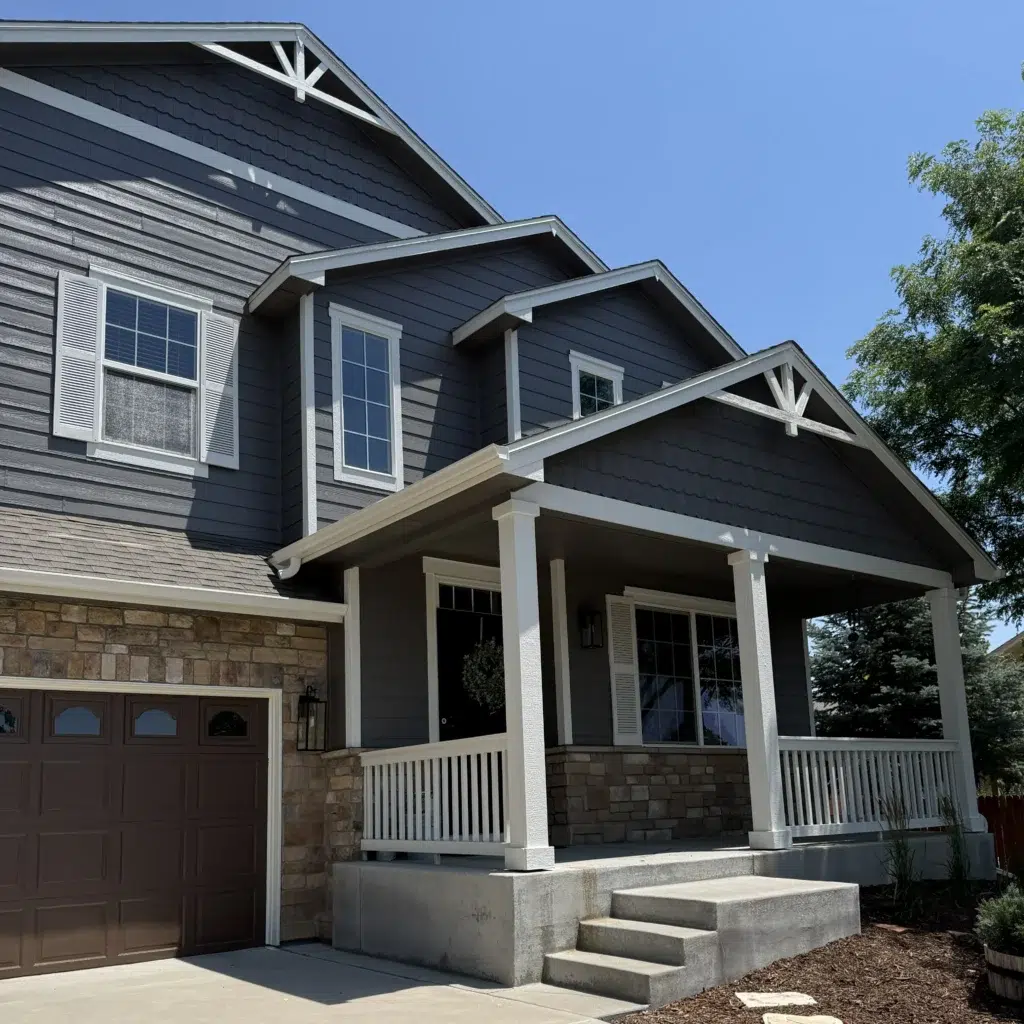
Going darker than LRV 55? Use a solar-reflective coating designed for vinyl and PVC, such as Sherwin-Williams VinylSafe or Benjamin Moore Colors for Vinyl. These use special pigments that reflect heat even in deep shades, so you can get the color you want without warping the board.
This matters most on Colorado homes where south- and west-facing trim gets intense UV for hours. UV rises about 10% for every 1,000 meters of elevation, which is a meaningful factor along the Front Range from Erie to Loveland. Our post on what affects exterior painting cost covers how UV and climate shape every exterior coating decision.
What About Composite Trim Paint?
Composite trim is a different animal from cellular PVC, though many of the same principles apply. Paint performs very well on low-maintenance trim made from blends of PVC, polypropylene, polyethylene, polyurethane, polystyrene, and cellulosic fibers.
The tricky part: some composite trim carries a small amount of the release agent used during molding, and that can interfere with adhesion, so the surface needs prep first. A quick wipe with mineral spirits or denatured alcohol, allowed to dry, removes any wax-like residue, and a wash with water and detergent clears water-based residue and dirt.
After that, composite trim should be primed with a mildew-resistant exterior primer, then finished with two coats of exterior 100% acrylic latex. Some composite trim comes pre-primed, and those products should be painted within about 30 days of installation, before UV weathers the primer and causes adhesion problems. That 30-day window catches a lot of homeowners off guard after a new build or trim replacement.
The Right Process for Painting PVC and Composite Trim
Whether you are working with PVC or composite trim, the steps are similar. Here is what a proper job looks like:
1. Clean thoroughly. Remove dirt, grease, and any factory residue. Cleaning and scuffing are requirements, not extras.
2. Scuff lightly. PVC is smooth, so a light pass with fine-grit sandpaper gives the primer something to grab.
3. Apply a bonding primer. For PVC, use a primer rated for plastic or vinyl. Our guide on why paint primer matters explains how this step makes or breaks adhesion on tricky surfaces.
4. Choose the right topcoat. Exterior-grade 100% acrylic latex, in satin or semi-gloss, holds up to cleaning and gives trim a crisp, defined look. For light colors (LRV 55 and above), that paint is flexible, adheres well, and resists fading and chalking.
5. Apply multiple thin coats. Thin coats cure better, adhere better, and look better than one thick coat.
6. Check the LRV before committing to a dark color. This one step can save you from warped boards and a repaint within a season.
Colorado’s Climate Makes Product Choice Even More Important
Homeowners often ask whether what works in other states applies here. The short answer: Colorado demands more from exterior coatings than most of the country.
The combination of intense UV, low humidity, and temperature swings that can run 40 degrees between morning and evening puts real stress on exterior surfaces. PVC already expands and contracts with temperature, and that behavior gets amplified here. The wrong product or skipped prep speeds up every failure mode: peeling, cracking, warping, and adhesion breakdown.
PVC has a relatively high coefficient of thermal expansion, so it moves substantially more than wood trim under temperature swings. For Fort Collins and Broomfield homeowners choosing a deep color, that is not theoretical; it shows up on south-facing trim during Colorado summers. Scheduling matters too: Foothills Painting does not recommend exterior painting in December and January, when surface temperatures drop fast and adhesion suffers, so spring through early fall gives the best conditions. Our guide to exterior door paint that resists fading covers how finishes hold up on other exterior surfaces.
What to Look for in a Contractor Who Paints PVC Trim
Not every painter knows the specifics of PVC trim. When evaluating contractors, a few things are worth asking about.
Do they know the LRV rule? A contractor who does not mention light reflectance value when you ask about dark colors on PVC is missing a critical piece of knowledge, and warped trim is an expensive problem.
What primer do they use on PVC? The answer should reference a bonding or adhesion primer rated for plastic or vinyl, not a standard drywall primer.
How many coats? Two finish coats over primer is the standard. One thin coat over bare PVC is not a professional application.
Do they know Colorado’s conditions? Product selection and scheduling need to account for UV, low humidity, and temperature swing. A team that paints year-round across northern Colorado and the Denver metro understands how those conditions affect trim.
Foothills Painting has been doing exactly that kind of work across Fort Collins, Erie, Arvada, Boulder, Longmont, and surrounding communities. The team plants five trees for every home painted through its partnership with OneTreePlanted, because doing the job right means caring about what is left behind. Every exterior project includes the prep that makes paint last, whether the surface is wood siding, fiber cement, or PVC trim.
Ready to get your trim painted the right way? Contact Foothills Painting at 970-427-2866 to schedule a free consultation, and we will walk you through color choices, LRV guidelines, and what will actually hold up on your home.