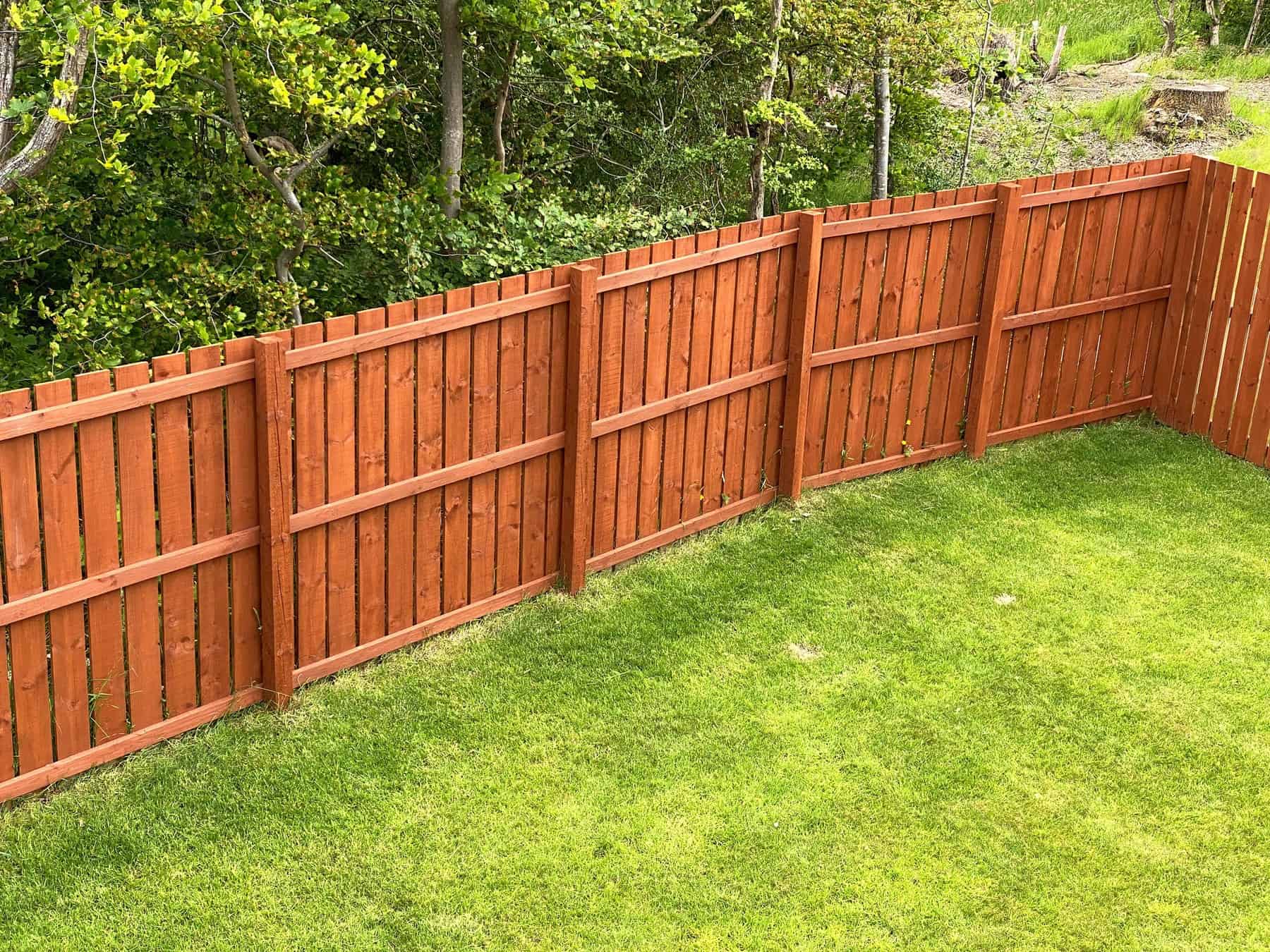
Cedar fence owners in Centennial know the Front Range sun can turn warm wood gray faster than expected. If you are trying to find the best stain for cedar fence protection in Colorado’s climate, the answer is not as simple as grabbing whatever sits on the hardware store shelf. Altitude, UV intensity, freeze-thaw cycles, and Colorado’s own VOC rules all decide which products hold up and which fail early.
Key Takeaways
- Cedar’s natural oils can make water-based stains absorb unevenly, so penetrating oil-based formulas are the safer choice.
- Colorado’s high-altitude UV breaks down unprotected wood faster than in most other regions.
- Clear sealers alone will not stop graying. You need a stain with real pigment to block UV.
- Most quality stains need a fresh coat every 3 to 5 years, and heavily sun-exposed sections sooner.
- Colorado has its own VOC limits, so some stains that ship freely to other states cannot be used here.
Why Colorado’s Climate Makes Staining Cedar Harder
Colorado’s Front Range gets exceptional annual sunshine, and at Centennial’s elevation, UV is far more damaging to exterior wood than at sea level. With intense UV, dry air, and freeze-thaw swings, the right stain can stretch a fence’s life from a few years to 10 to 15 years.
Cedar holds up well on its own, since its natural oils resist insects and decay better than most fence woods. Those same oils create the staining challenge: they can stop water-based stains from absorbing evenly, which is why a penetrating oil-based stain is the safer pick. For how oil and water-based products compare across exterior work, see this breakdown of oil vs. latex exterior products.
South and west-facing fence panels, common across Centennial, take the strongest direct sun. UV breaks down wood fibers and fades color fastest on those sides. Expect to restain them more often than panels facing north or east.
What Makes the Best Stain for Cedar Fence in Colorado
Not every stain performs the same on cedar, and not every formula suits high-altitude conditions. Four factors separate the best stain for cedar fence from one that fails early.
Opacity Level
This is the most important call you will make. Too little pigment and the wood grays. Too much and you bury the grain that made you choose cedar.
For most cedar fences in Centennial, a semi-transparent oil-based stain hits the balance: enough pigment to block UV while the grain still shows. Left unprotected, cedar’s warm red-brown surface oxidizes to silver-gray within one season of sun. Pigment is the only thing that stops UV, so a clear sealer will not cut it.
UV Protection Chemistry
Cedar benefits most from semi-transparent oil-based stains that lift its warm, reddish tones. Given Colorado’s sun, prioritize formulas built for UV defense, especially those with transoxide pigments rated up to 99% UV protection. That pigment load is what keeps color from washing out a season after you apply it.
Penetration Over Film Formation
Quality stains soak into the wood fibers instead of sitting on top, which lets the wood breathe while repelling water. Film-forming coatings can peel and chip under Colorado’s wide temperature swings. A penetrating stain will not peel; it fades gradually and refreshes with a clean surface and a fresh coat, no stripping required.
VOC Compliance
This one surprises many Centennial homeowners. Colorado caps VOCs in wood stains at 275 grams per liter under Colorado’s VOC limits for architectural coatings, which is stricter than federal rules. That cap is why some widely recommended products, including the TWP 100 Series, cannot be sold or used here.
Before you buy, confirm the product is compliant for all 50 states or specifically for Colorado. A stain that is legal in Texas may be off the table on your fence.
5 Cedar Fence Stains That Hold Up in Colorado
Each of these has a track record on cedar, handles high UV and temperature swings, and comes in formulas that meet Colorado’s VOC limits. Think of this as a shortlist for the best stain for cedar fence in a high-sun climate, not a strict ranking.
Ready Seal Natural Cedar Exterior Stain
Ready Seal gets recommended for cedar because it is very hard to apply badly. Its penetrating oil floods on with a sprayer, roller, or brush with no wet edge to maintain and no overlap marks, even in full sun. On cedar, the oil soaks into the thirsty fibers while trans-oxide pigments knock down UV without masking the grain.
Plan on a fresh coat every 2 to 3 years for south-facing panels and 3 to 4 years for shaded areas.
TWP 1500 Series Cedartone
The TWP 1500 Series rides on contractor trucks for a reason, and the 1516 Cedartone shade is built for cedar. It is an oil-based semi-transparent with enough pigment for real UV protection and that warm reddish cast, while the grain and knots still show through. For Colorado, the key detail is that the 1500 Series is compliant in all 50 states, unlike the TWP 100 Series that the state’s VOC rules prohibit.
Messmer’s UV Plus Natural Cedar
Messmer’s UV Plus is widely used across Colorado and stocked by regional suppliers. Its transparent iron oxide pigments absorb UV while letting visible light through, so the wood’s natural character still reads. The label calls for surface temperatures between 50°F and 90°F and no application in direct sun on hot days, which is practical advice for a July afternoon here.
Behr Naturaltone Penetrating Wood Stain
Behr Naturaltone is a semi-transparent oil-based formula that penetrates cedar deeply while resisting mildew and dirt. It is widely stocked at Home Depot, which is a real convenience for Centennial homeowners picking up supplies locally. It also handles rain about 4 hours after application, a useful margin during Colorado’s unpredictable spring.
Cabot Australian Timber Oil
Cabot’s Australian Timber Oil is built for deep penetration, which makes it a strong pick for older cedar that has dried out over multiple winters. The oil-based formula carries pigment and protective compounds deep into the fibers and enhances western red cedar’s warm tones rather than flattening them. Expect a fresh coat every 3 to 5 years under normal conditions, and buy extra since coverage per gallon runs lower than surface stains.
How to Know When Your Cedar Fence Needs Restaining
Most cedar fences need a fresh coat every 3 to 5 years, and sun-facing sections in Centennial usually land on the shorter end. Heavy sun or rain pushes that timeline up.
Here is a quick test: spray the fence with a garden hose. If water beads and rolls off, the stain is still protecting the wood. If it soaks in, the stain has worn through and it is time to recoat.
Before reapplying, clean the fence thoroughly to strip dirt, pollen, and surface wear, then let it dry completely. Wood moisture should sit below 12% before you open a can. The same UV rules apply to other exterior wood, so if you are also maintaining a deck, our guide on how exterior wood handles Colorado’s climate is worth a read.
For new cedar, wait 1 to 2 months before the first coat so the wood dries and the stain absorbs evenly. Keep shrubs and weeds about 1 foot off the fence line too, since vegetation traps moisture against the boards after rain.
When to Bring in a Professional
Staining a short section is a manageable weekend job. A full cedar privacy fence across a Centennial backyard, with multiple panels, double-sided boards, gates, and corners, is a full day of labor before any prep. Even the best stain for cedar fence underperforms when that prep is rushed.
Hiring a pro means the prep gets done right: cleaning, addressing soft or damaged boards, and applying in the correct weather window with the right tools. Back-brushing, where stain is sprayed on and worked into the grain while wet, forces deeper penetration and more even coverage. For the full scope of this work, see our professional deck and fence staining services.
Knowing what drives exterior painting and coating costs also helps you set realistic expectations and compare estimates accurately. A clear scope upfront is the difference between a fair quote and a surprise.
Ready to Protect Your Cedar Fence?
If your cedar fence in Centennial is overdue for a fresh coat, or you want it done right with proper prep and a product matched to Colorado’s UV and temperature swings, Foothills Painting is ready to help. We serve the Denver metro and Northern Colorado, and back our exterior work with 6 to 9-year warranties, depending on scope and product. You can see the full range of our professional exterior painting and staining services for the area.
We also plant 5 trees for every residential project, so choosing professional service here gives something back to Colorado’s environment. If that matters to your household, read more about our sustainable exterior work.
Your fence has its own mix of sun exposure, board age, and wood condition, and the best stain for cedar fence depends on all three. Call 970-427-2866 for a FREE estimate today.