
Let’s slow this down for a second because satin paint vs. matte paint is one of those decisions that feels small, yet it shows up every single day once the walls are finished. Same color. Same room. Totally different outcome.
Most homeowners are surprised by how much sheen affects the final look. Light, texture, durability, and even how often walls need attention all change depending on the finish. That’s why this conversation matters early, not after the paint is already on the wall.
Key Takeaways:
- Satin paint vs. matte paint comes down to light and durability. Satin reflects light and handles cleaning better, while matte absorbs light and softens wall flaws.
- Room use should guide the finish choice. High-traffic areas lean satin, while quieter spaces often benefit from matte’s softer look.
- Wall condition matters more than most expect. Matte hides uneven surfaces, while satin highlights prep quality and texture.
- Lighting changes how each sheen reads. Natural and artificial light can make the same color feel very different depending on finish.
- A mix of sheens often works best. Using satin and matte strategically creates balance across walls, trim, and oak kitchen cabinets.

Why Paint Sheen Has More Impact Than Color Alone
Color gets all the attention, but sheen quietly does the heavy lifting. It controls how light moves, how texture shows up, and how forgiving the surface feels day to day.
In the satin paint vs. matte paint discussion, the difference comes down to reflectivity. Satin reflects light. Matte absorbs it. That single detail changes how walls look at noon versus evening, and how they age over time.
This becomes even more noticeable in homes with textured drywall, patched areas, or older surfaces that are not perfectly smooth. The sheen choice can either highlight those details or soften them.
Starting With Matte Paint And What It Does Well
Matte paint sits at the low end of the sheen range. It has little to no shine, which gives walls a calm, uniform appearance.
Because it absorbs light, matte paint helps mask surface inconsistencies. Small dents, patched spots, and subtle texture variations tend to fade into the background. This is why matte is common on large wall areas and ceilings.
Matte also delivers rich color depth. Dark colors often feel deeper and more grounded when finished in matte. That velvety look is one reason homeowners choose it for bedrooms, offices, and formal spaces.
That said, satin paint vs. matte paint is not just about appearance. Matte finishes are less forgiving when it comes to regular cleaning. Scuffs and marks can show more easily, especially in higher-traffic rooms.
Where Satin Paint Changes The Conversation

Satin paint lands in the middle of the sheen spectrum. It has a soft glow that reflects light without looking glossy.
That slight sheen creates a tighter surface film. The result is better resistance to moisture, fingerprints, and routine cleaning. This is why satin often shows up in hallways, kitchens, bathrooms, and mudrooms.
In the satin paint vs. matte paint comparison, satin tends to reveal more wall texture. Light bouncing off the surface makes imperfections easier to spot, especially in rooms with large windows or strong overhead lighting.
However, when walls are properly prepared, satin offers a clean, polished look that holds up well over time.
How Lighting Changes Satin Paint Vs. Matte Paint
Lighting is where many people misjudge sheen. Natural light exaggerates reflectivity, while artificial light softens it.
Matte paint absorbs light, which can make a room feel cozier. In smaller spaces or rooms with limited windows, matte can feel heavier or darker than expected.
Satin paint reflects light back into the room. This often makes spaces feel brighter and more open. In kitchens, bathrooms, and areas with windows, satin paint can help balance shadows and highlight architectural details.
This same principle applies beyond walls. When choosing finishes for oak kitchen cabinets, satin often feels cleaner and easier to maintain, while matte can read flat under certain lighting conditions. The same color behaves differently depending on sheen and light exposure.
Durability Differences That Actually Matter
Durability is where satin paint vs. matte paint separates clearly.
Satin finishes include more resins and binders. That creates flexibility and resistance to wear. Walls finished in satin tolerate wiping, light scrubbing, and moisture better than matte surfaces.
Matte finishes lack that protective layer. They hide imperfections well, but they do not resist abrasion as effectively. Over time, high contact areas may show wear faster.
This does not mean matte is a poor choice. It means placement matters. Bedrooms, dining rooms, and low-traffic living spaces often benefit from matte’s softer look without facing constant contact.
Texture And Feel Once The Paint Is On
Texture is not just visual. It is physical.
Satin paint has a smoother, slightly slick surface. This comes from the same binders that add durability. That smoothness is why fingerprints wipe away more easily.
Matte paint feels softer and more powdery to the touch. It lacks tackiness, which contributes to its even appearance on large surfaces.
In satin paint vs. matte paint, the tactile difference becomes noticeable on trim, doors, and cabinetry. Satin tends to feel more finished on surfaces that are frequently handled, such as oak kitchen cabinets and interior doors.
Cost Considerations Without Overthinking It
Sheen impacts price, but not dramatically.
Matte finishes typically cost less per gallon than satin. The difference is usually a few dollars, though it varies by manufacturer and quality level.
In larger house painting projects, that difference can add up. Still, the decision should lean on performance, not just cost. Saving a few dollars upfront does not help if the finish does not fit the space long-term.
Matching Sheen To Room Function
Rather than choosing one sheen for the entire home, most spaces benefit from a mixed approach.
Here is how satin paint vs. matte paint often breaks down by use:
- Living rooms and bedrooms often lean matte for softness and visual calm
- Hallways and stairwells often lean satin for durability
- Kitchens and bathrooms often lean satin for moisture resistance
- Ceilings commonly lean matte to reduce glare
When color questions come up during this process, details like does paint dry darker or lighter can influence how a sheen appears once cured, especially under different lighting conditions.
How Wall Condition Plays A Role
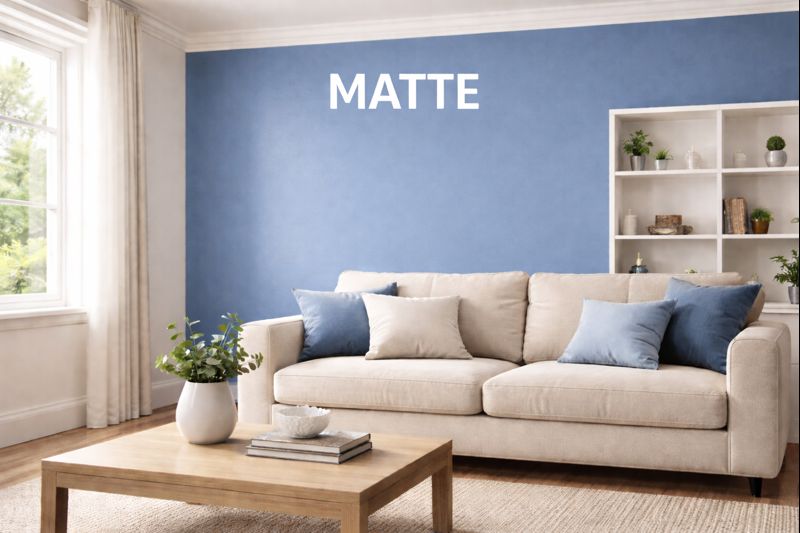
Wall condition matters more than most people expect.
Matte paint hides uneven drywall, patchwork, and subtle texture changes. Satin paint reflects light, which highlights flaws if prep work is rushed.
This is where professional preparation makes a difference. Surface repairs, sanding, and proper primer selection all affect how satin paint vs. matte paint performs.
The number of coats also impacts finish consistency. Topics like how many coats of paint for the wall often come up because coverage and sheen uniformity go hand in hand.
Sheen Choices Beyond Walls
Sheen decisions do not stop at walls.
Trim, doors, and oak kitchen cabinets introduce different priorities. Cleanability and resistance often matter more than softness in these areas.
Satin paint frequently works well on cabinetry and trim because it balances durability with a refined look. Matte finishes are rarely used on cabinets due to wear concerns, though they may appear in specialty designs.
Understanding sheen finish options across the home creates visual consistency without forcing one solution everywhere.
How Professionals Evaluate Satin Paint Vs. Matte Paint
Professional painters do not choose sheen in isolation. They look at:
- Lighting direction and intensity
- Wall condition and texture
- Room usage and traffic
- Color depth and undertones
- Long-term maintenance expectations
This approach avoids surprises after the paint dries. It also explains why satin paint vs. matte paint is never a one-size decision.
For homes with existing finishes like oak kitchen cabinets, professionals factor in how wall sheen interacts with cabinetry, flooring, and natural wood tones.
What Sets A Professional Process Apart
A strong result starts before paint is opened. Expert painters in Arvada, CO approach sheen decisions with context, not assumptions.
At Foothills Painting, the process focuses on preparation and planning:
- Evaluating wall condition and lighting
- Discussing how each room is used
- Selecting primer and finish compatibility
- Applying consistent coats for even sheen
- Reviewing final results under real lighting
This method keeps satin paint vs. matte paint from becoming guesswork.
Final Thoughts On Satin Paint Vs. Matte Paint
Choosing satin paint vs. matte paint shapes how a room looks, feels, and holds up over time. Matte offers softness and forgiveness, while satin brings durability and light reflection. The right choice depends on the room, lighting, and surface condition, not trends or assumptions.
When the goal is a finish that looks right today and continues to perform, professional guidance helps avoid costly rework. If you are planning a project in Arvada, Aurora, Boulder, and the surrounding areas, Foothills Painting can walk through the options with clarity and care.
Call us at 970-427-2866 for a FREE estimate and a conversation grounded in how your home actually functions.